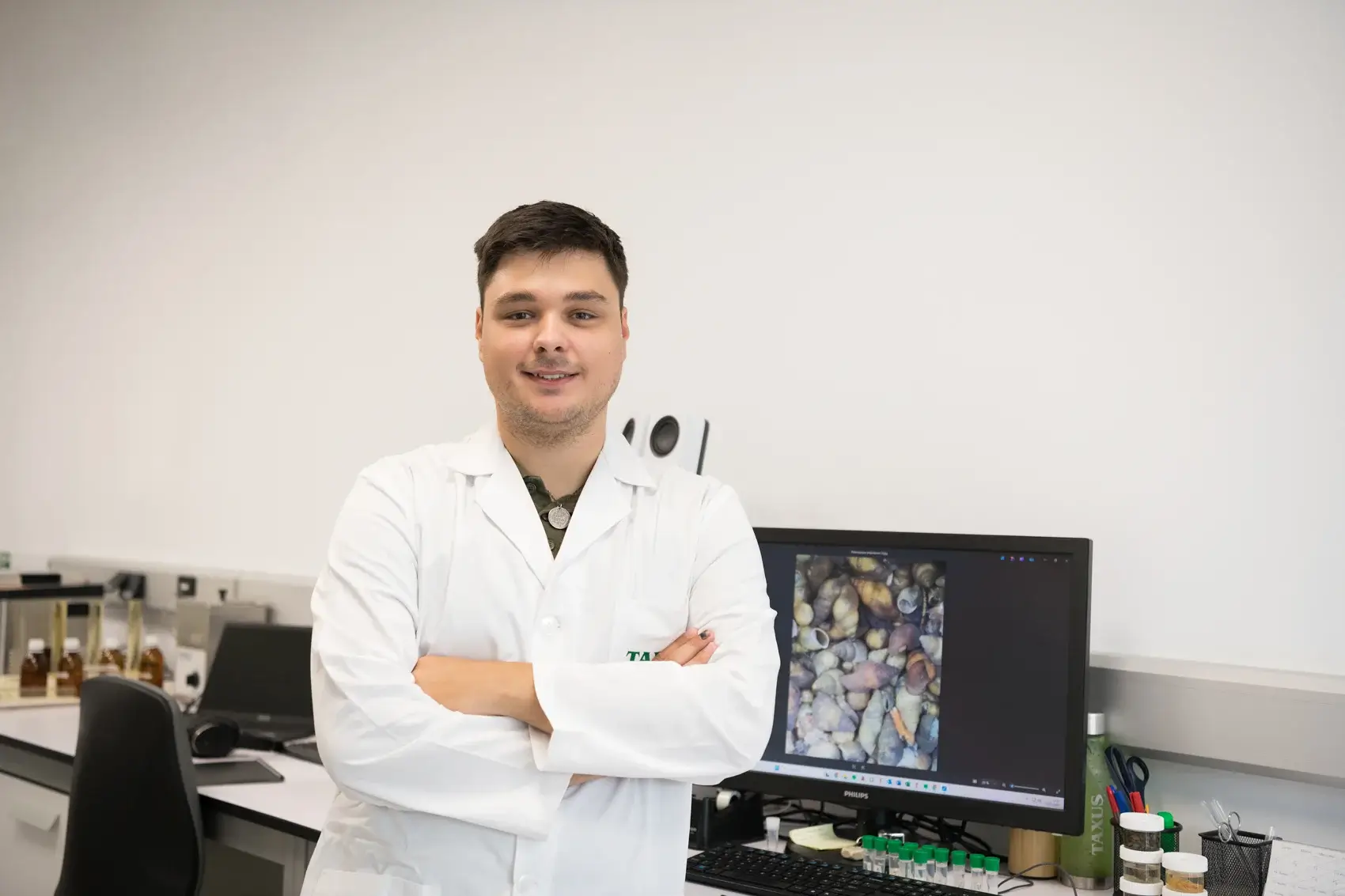
In this interview we talk to Omar Sánchez, researcher of the Genetics and Environmental Laboratory Area of TAXUS MEDIO AMBIENTE, who has made a doctoral stay on the island of Madeira. His work, in collaboration with the group MARE Madeira (University of Madeira) and the University of Oviedo, focuses on the study of the invasive snail Potamopyrgus antipodarumcommonly known as the New Zealand slime snail, one of the most problematic invasive alien species in Europe.
With him we explore the impact of this species on island ecosystems, detection methodologies, the importance of international scientific collaboration and how this knowledge translates into improvements for environmental consulting in Spain.
What motivated you to do a doctoral stay in Madeira?
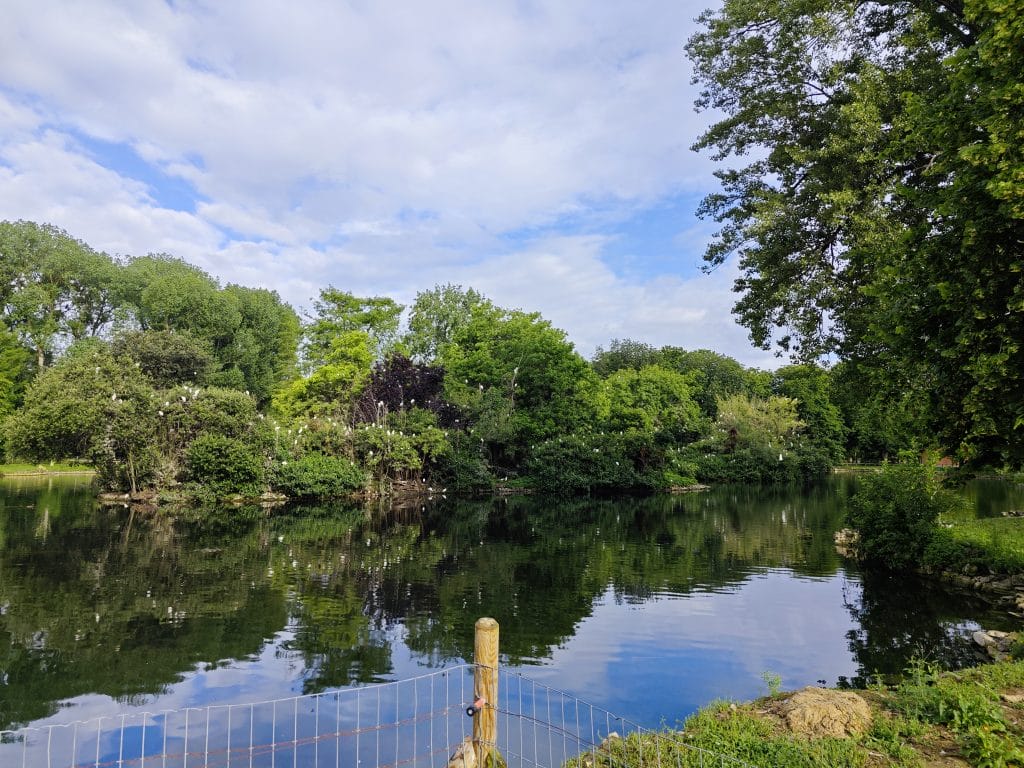
My line of research has always focused on invasive species, especially in continental freshwater and terrestrial environments. But island ecosystems have some peculiarities that make them especially vulnerable: many endemic species, a very delicate ecological balance and, in addition, a lot of human pressure, especially from tourism.
I wanted to get out of the peninsular system and study how biological invasions work on islands. Madeira seemed to me the ideal place: insular, tropical and with a great biodiversity. Talking with my thesis directors -Andrés Arias (University of Oviedo) and Javier Granero (TAXUS MEDIO AMBIENTE)- we saw that it made sense to look for an
What role have you played within the project?
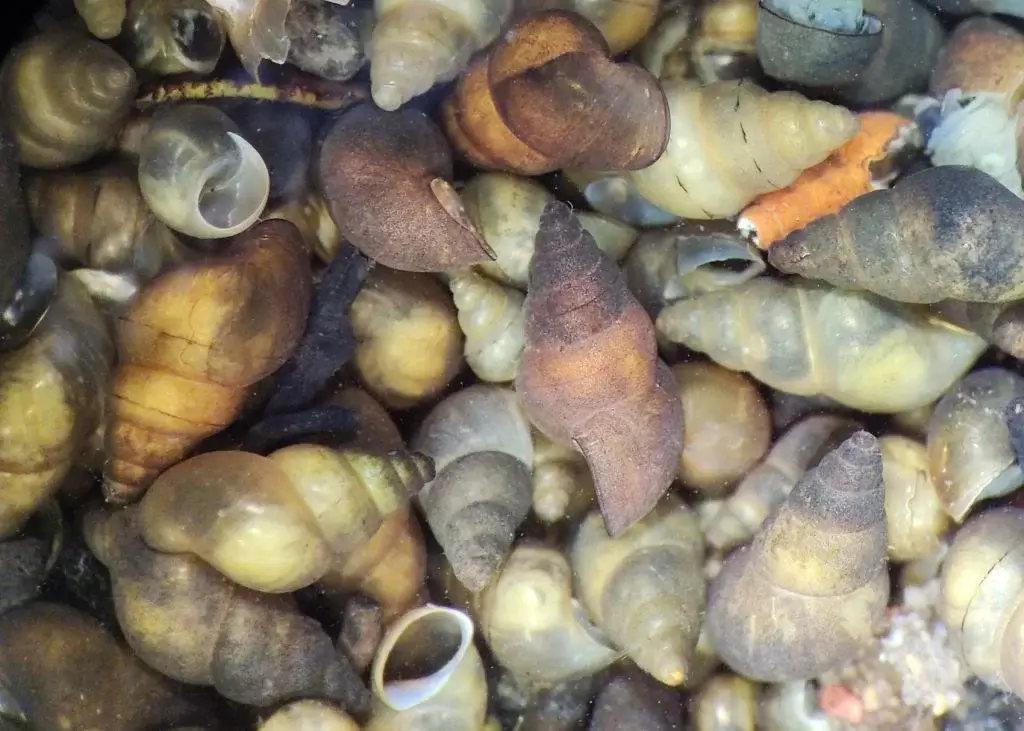
When I arrived at MARE, they had just detected Potamopyrgus antipodarum, an invasive freshwater mollusk, for the first time. They told me that they were starting to monitor it, so it was perfect for me because that is exactly my field of expertise. I consider myself a malacologist, that is, a mollusk specialist, and besides, this species is one of the 100 most harmful invasive alien species in the world.
In Madeira they had found it recently, and being a group more focused on the marine environment, they had less experience in freshwater. So I entered with a very collaborative attitude, willing to learn from their work, but I was also able to contribute with my experience: from sampling design, logistics, community analysis… In that sense, I had a lot of autonomy. I would say that I assumed a technical leadership role within the margins they gave me, with a lot of respect for their structure.
Why is the study of Potamopyrgus antipodarum so important?
This species has a long history as an invader in Europe. It was first detected in the 19th century, but for years it was considered a native species. Once it was correctly identified, it was found to be a New Zealand species and could form explosive populations: more than 30,000 individuals per square meter, leading to a significant loss of biodiversity in the environment where it establishes.
The most serious aspect is that its physiology gives it enormous advantages over other species:
- It has an operculum that allows it to retain moisture and survive desiccation.
- It reproduces by parthenogenesis, generating female clones continuously.
- It is ovoviviparous, so eggs hatch inside the body and avoid juvenile mortality.
- It tolerates a certain level of salinity, which allows it to invade estuarine zones.
All this causes it to profoundly alter ecosystems: it competes for food and space, changes the structure of communities, modifies physicochemical parameters of the water and alters trophic chains. In addition, its abundance can deceive predators such as fish or birds, which consume it without obtaining nutritional value, and it can even leave the digestive tract alive, because the operculum protects it from digestion.
In addition, mollusks such as this one can act as secondary hosts for parasites (liver flukes, trematodes), posing a risk to wildlife, livestock and even humans. From the One Health approach, it is an ecosystemic and public health problem.
What methodologies have been used for the study?
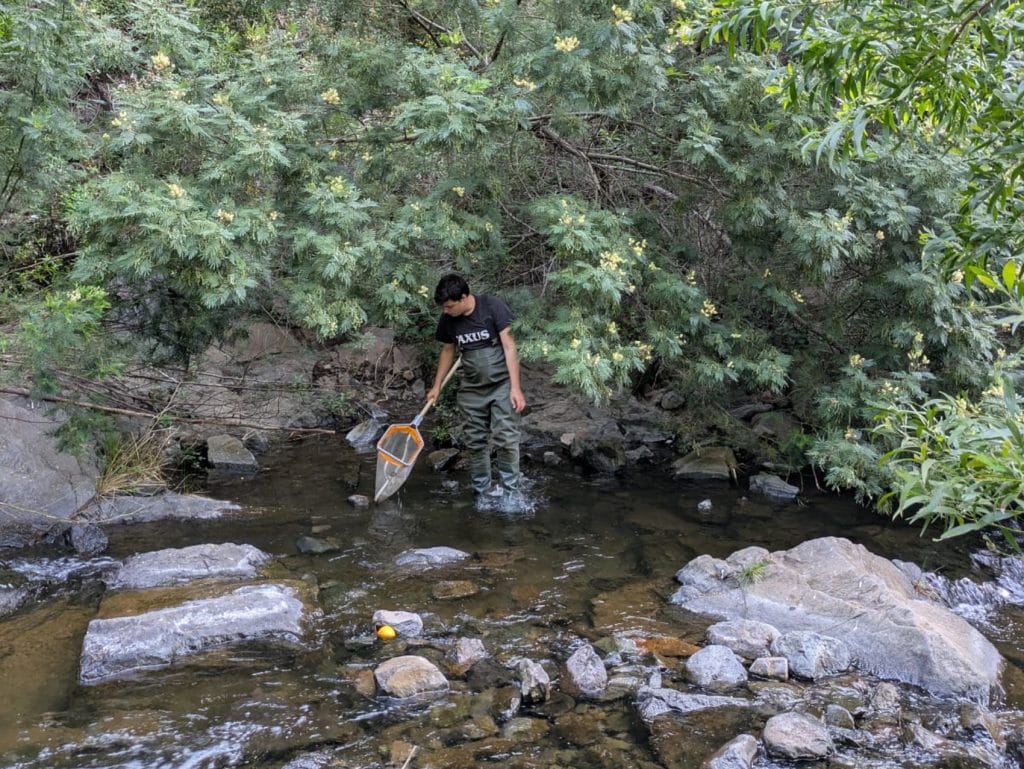
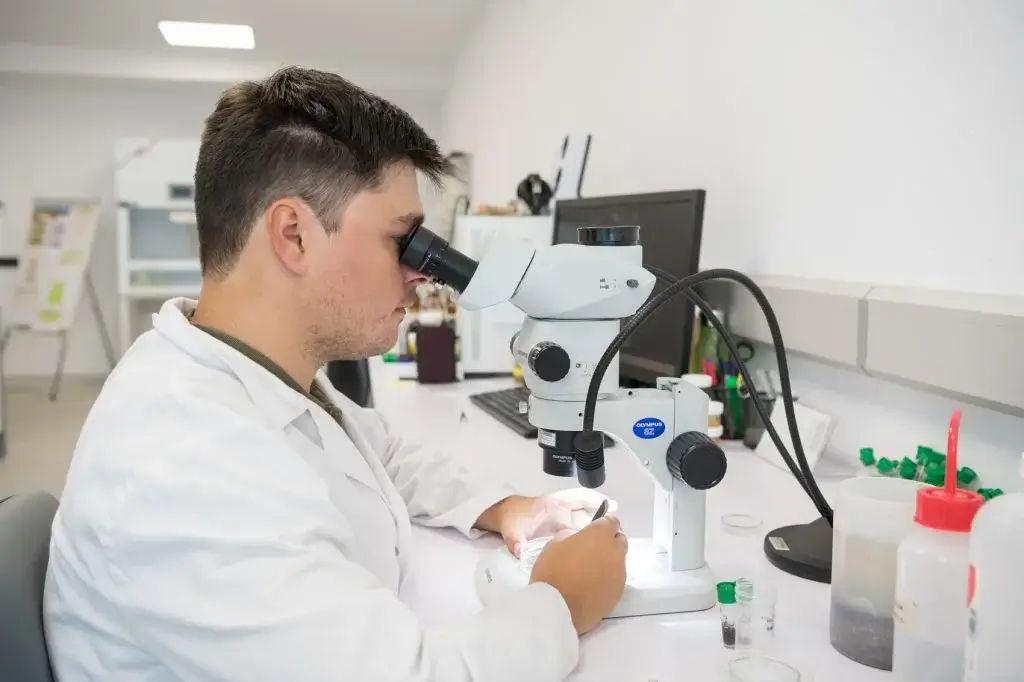
We have worked mainly with traditional field sampling: direct collection of macroinvertebrates, visual surveys, morphological analysis under magnifying glass… Soon we will incorporate environmental DNA techniques, which TAXUS has already been applying and which have great potential to improve the early detection of invasive species.
What has been the value of this collaboration between Asturias and Madeira?
Very much so. To our knowledge, a study of this type focused on invasive macroinvertebrates had not been carried out before in the Macaronesia region. This collaboration between TAXUS MEDIO AMBIENTE, the University of Oviedo and the MARE Madeira group has been a pioneering experience.
It also opens the door to new lines of work and markets in island territories, where biodiversity is very rich but also very fragile. This type of alliance strengthens our technical capacity and also our international projection.
How can this knowledge be applied to TAXUS’ work?
At TAXUS we have been working with IAS (invasive alien species) for some time, but often integrated into broader studies, as part of the analysis of water quality. This project has meant a change of approach: working directly and focused on a specific IAS, with very well-defined objectives.
Moreover, in the Iberian Peninsula, this species has been largely ignored. There is a tendency to focus on “flagship species”, which are more visible or mediatic. This project reminds us that there are other equally problematic species that go unnoticed and deserve technical attention.
All this experience allows us to improve our services, offer a more refined consultancy and strengthen our focus on biodiversity, biosafety and conservation.
How has this stay influenced your growth as a researcher?
It has been a very enriching experience. On a professional level, it has allowed me to get out of the routine, face new challenges, get to know other work models and contribute in an international context. The MARE group integrates researchers from Europe, North and South America, and that generates a very stimulating environment, both scientifically and culturally.
On a personal level, it is a mind-opening journey. Science gains a lot when you network and get out of your own territory. For me, it has been an opportunity for total growth.
What message would you like to convey to young researchers?
I would definitely encourage them to do an international stay. It is an experience that changes you, shapes you and connects you with other realities. You learn a lot, you contribute to the target group and you come back with a broader vision of what it means to do research.
You can contact us at info@taxusmedioambiente.com, by phone at 985 24 65 47 or through our contact form.