
Location: Asturias and Cantabria
Dates: Summer 2025
Area: Education for Sustainability Area
Summer is a unique opportunity to bring nature closer to society and turn knowledge into good practices.
Between July and August, TAXUS MEDIO AMBIENTE manages environmental education camps in three reference facilities: the Atlantic Botanical Garden and the Nature Interpretation Center of Monte Deva (Gijón), and the Municipal School of Environment of Camargo with its Pequecultores program (Cantabria).
We are guided by the same purpose: to raise awareness of the sensitivity of our environment in order to protect and care for it.
Three scenarios, one common goal
Atlantic Botanical Garden (Gijón)
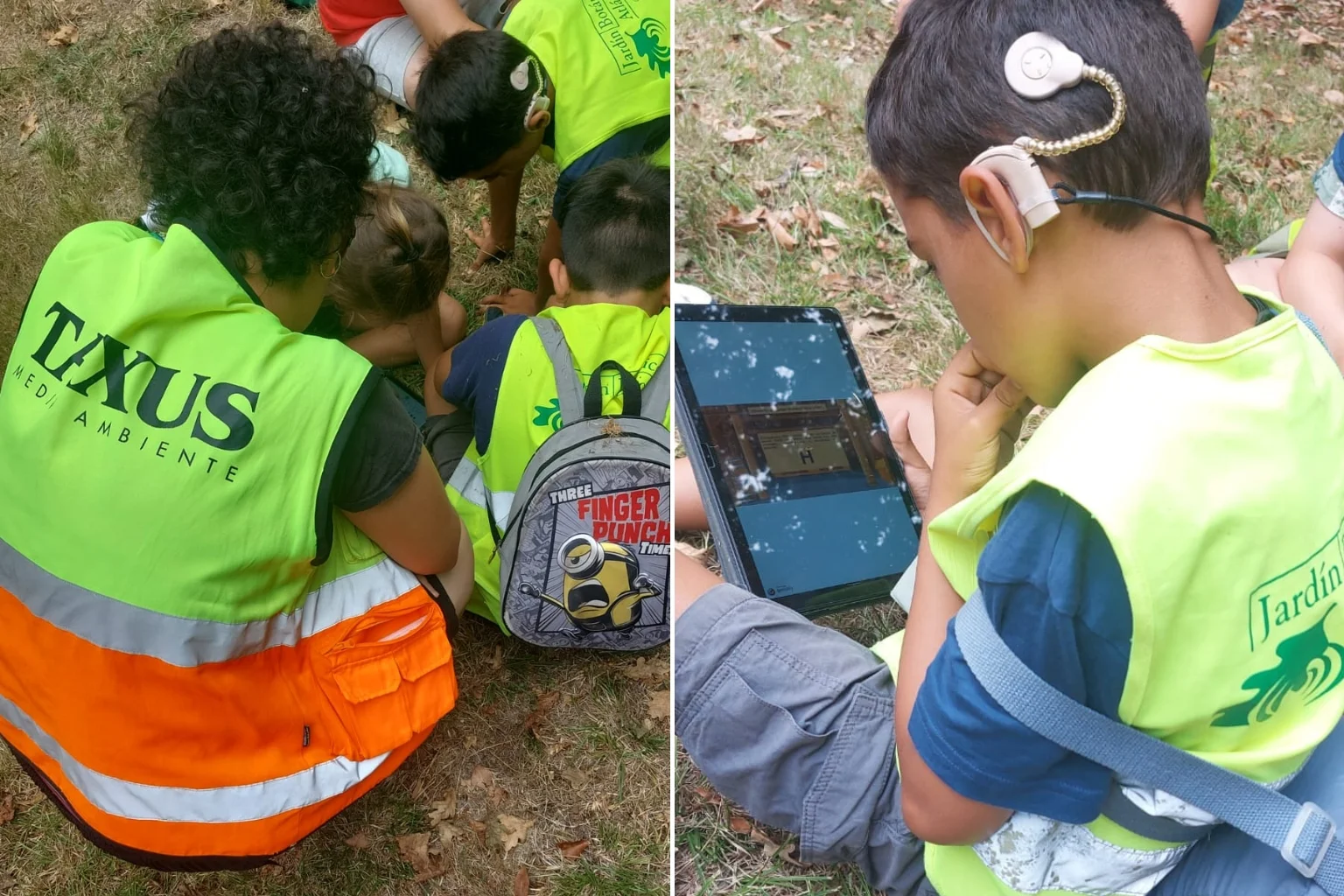
A living “plant museum” where children explore the diversity of plants, their adaptations and their relationship to culture. Each summer, the Botanic Gardens hosts children’s camps and guided tours as part of the “Summer at the Botanic Gardens” program , creating outdoor learning experiences that combine play and interpretation of the environment.
Monte Deva Nature Interpretation Center (Gijón)
In this space, the mountain is the classroom. The “Holidays on Mount Deva” program organizes fortnightly shifts with extended hours, integrating games, workshops and outings in the environment of Deva itself to discover its geology, biodiversity and heritage, always based on coexistence and respect for the environment.

Camargo Municipal School of Environment – “Pequecultores” (Cantabria)
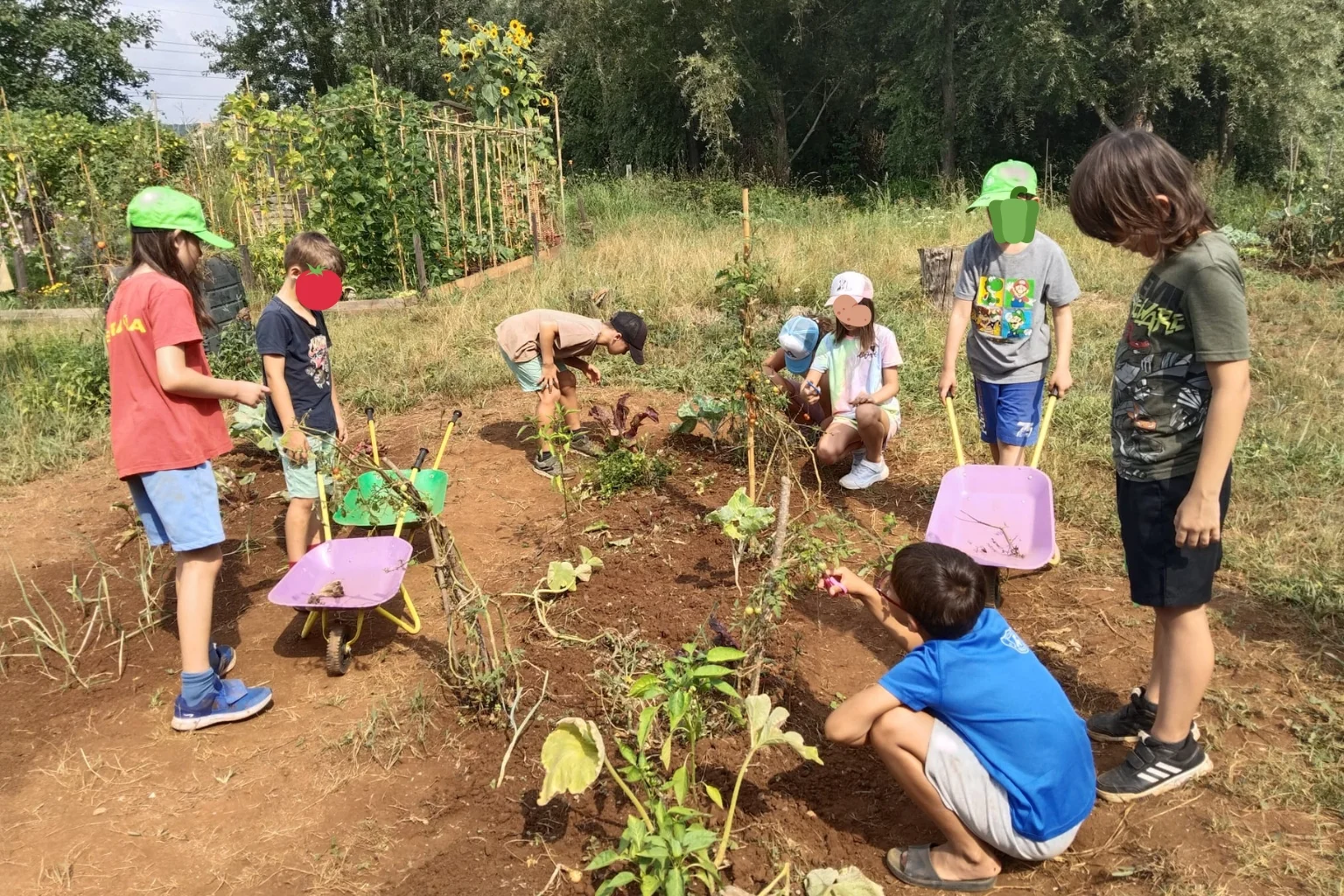
“Pequecultores” is a summer camp that combines the mixes the playful and didactic aspects of organic gardening.The work of the farm: preparing the land, using tools, sowing and caring for it. It is part of a annual program that promotes workshops, educational outings and orchards for schools in the municipality, as well as activities for all audiences that connect the natural and cultural heritage of the area. connect the natural and cultural heritage of the. Its holistic approach – environment, culture and community – makes it a pillar of environmental education in Camargo.

Methodology: learning by doing
In all of our camps we apply a simple premise: learning by doing. We design activities that combine observation, experimentation and play with clear and rigorous language.
The idea is not to memorize concepts, but to touch, look and understandto recognize species in the immediate environment, to follow the trail of water through the landscape, to identify good practices (saving, recycling, respect for trails and habitats) and to understand why these gestures matter.
This hands-on approach favors three cross-cutting learning:
- Autonomy and cooperation. Planning tasks, working as a team and sharing responsibilities.
- Critical thinking. Ask questions, contrast and draw conclusions from experience.
- Linkage with the territory. To name what we see – a river, a hedge, a wetland – in order to love and care for it.
From awareness to action
Environmental education is also prevention. By understanding how ecosystems function and how they are degraded, habits are internalized that reduce impacts y improve coexistence with the environment with the environment: less waste, efficient use of water, respect for fauna and vegetation, responsible mobility.
Camps are an opportunity to turn interest into daily actions, at school, at home and in the community.at school, at home and in the community.
Closing the summer always leaves the same feeling: a desire to return. When learning is lived with joy and rigor, nature ceases to be something distant and becomes part of our daily decisions.
That is the objective we share with the Atlantic Botanical Garden, Mount Deva and the Camargo School of the Environment: to sow today the attention and commitment we need tomorrow.