
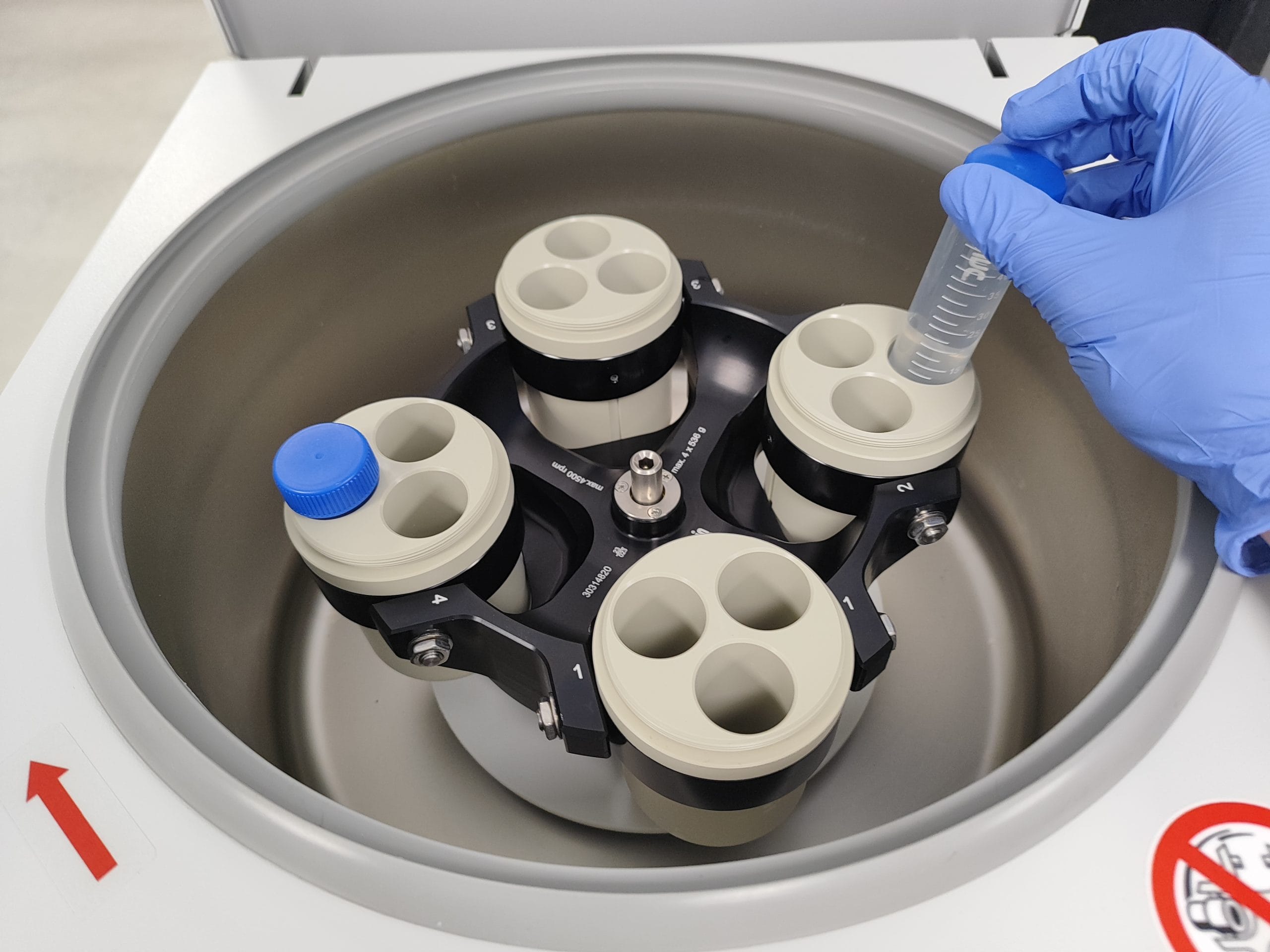
At Taxus Environment, we face complex challenges that require constant innovation and the development of new techniques. Molecular biology, and in particular DNA-based tools, has emerged as a promising solution to address biodiversity and sustainability issues. Two techniques stand out in particular in this field: environmental DNA (eDNA) and metabarcoding, both capable of offering efficient and accurate solutions in ecosystem management.
What is Environmental DNA?
Environmental DNA refers to genetic material released by organisms into the environment through natural processes such as secretions, excretions or tissue fragments. This DNA is present in water, sediment or even air, and we can recover it with different techniques. Its analysis allows us to detect species present in an ecosystem without the need to visualize or capture them, including those that are difficult to observe with traditional methods.
Different techniques can be applied to this genetic material to extract the maximum value from the information contained in the samples. These techniques include:
- qPCR (Quantitative Polymerase Chain Reaction) and ddPCR (Droplet Digital Polymerase Chain Reaction): Ideal for specific detection and quantification of target species.
- Metabarcoding: A high-throughput technique that allows multiple species to be identified simultaneously.
Metabarcoding
Metabarcoding combines DNA extraction with advanced bioinformatics tools and is based on high-throughput sequencing (HTS) technologies, High-Throughput Sequencing). These technologies allow a large number of DNA sequences to be processed in parallel, facilitating the identification of multiple species present in a sample.
The samples analyzed with metabarcoding can be environmental DNA, but other types of samples can also be processed, such as insect traps, scrapes from boats or docks, feces for diet analysis… any sample where we have DNA from different species that we want to identify. The applications can be hundreds.
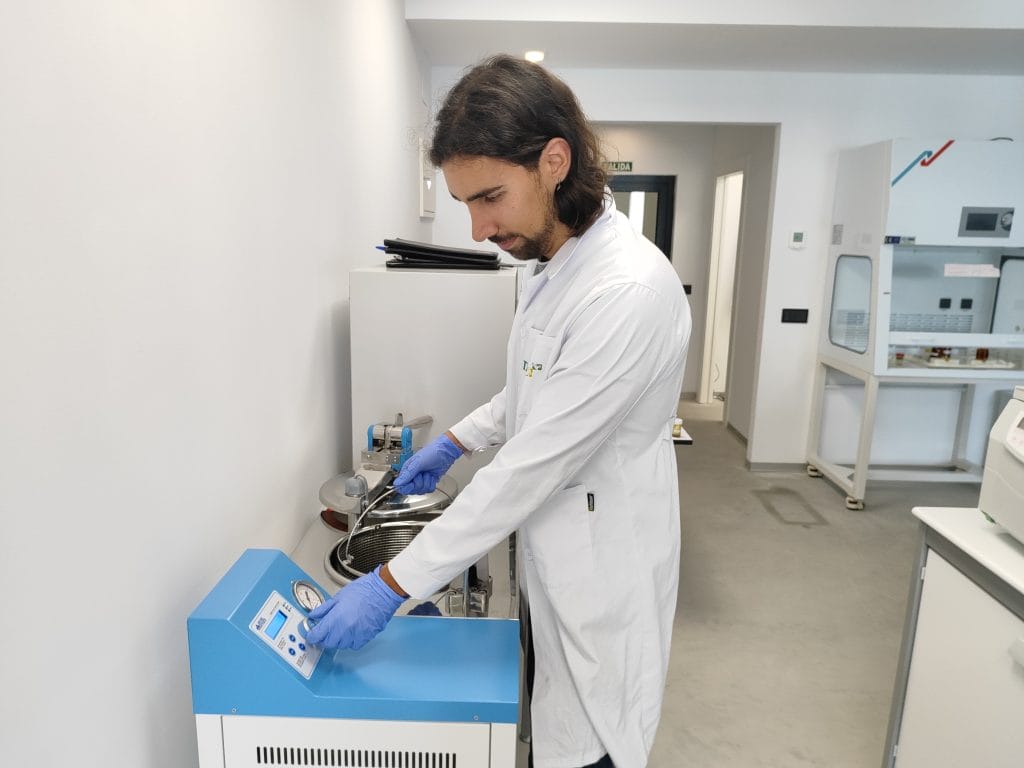
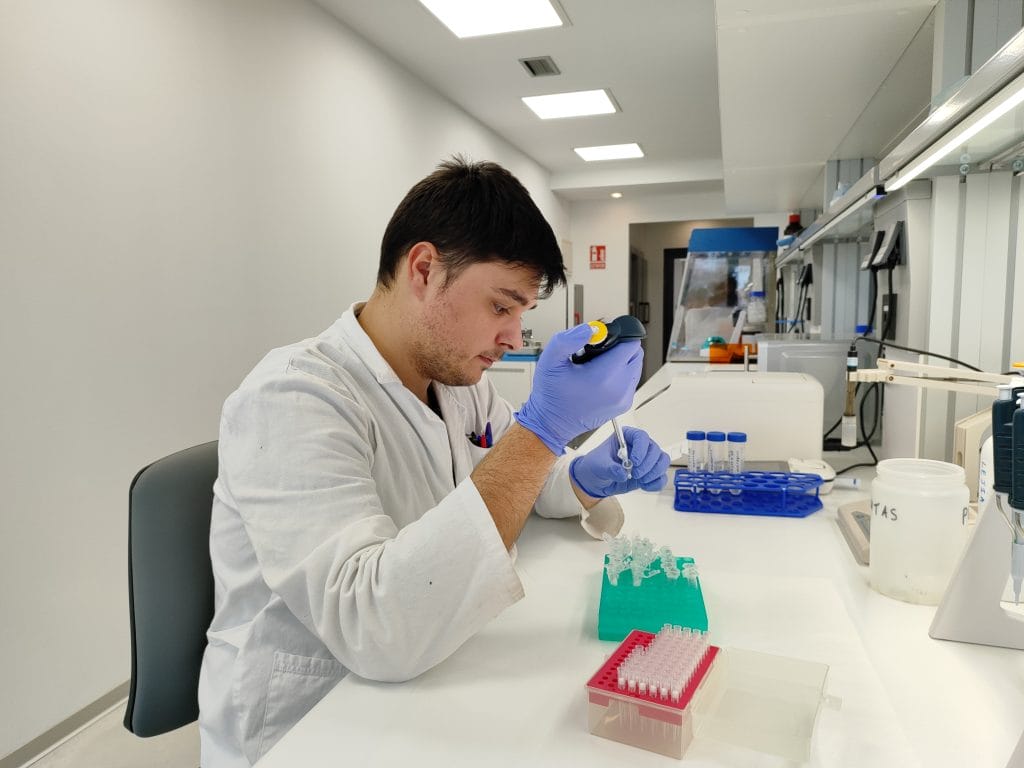
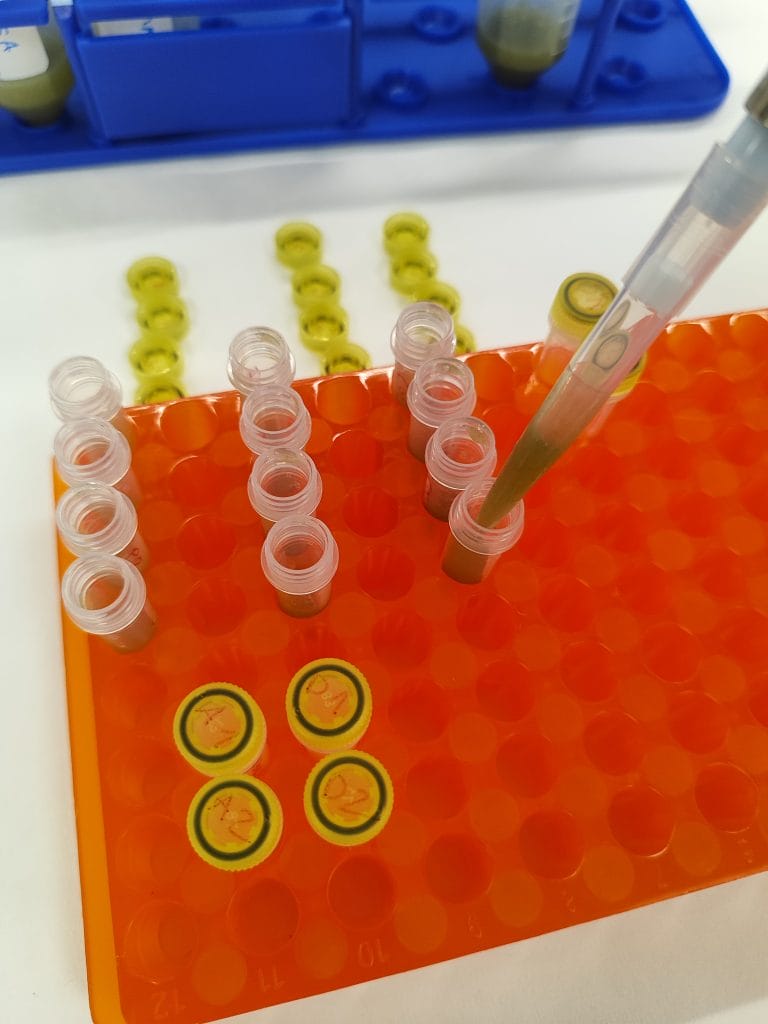
Practical Applications: From Innovation to Conservation
In a recent study, Taxus Medio Ambiente applied HTS-based metabarcoding techniques to assess biodiversity in rivers in northwestern Spain, identifying an average of 100 macroinvertebrate species per sample. This approach allowed not only to detect invasive species such as Craspedacusta sowerbii, but also to monitor vulnerable species such as the Iberian frog(Rana iberica).
The Value of Environmental DNA and Metabarcoding in Taxus Consulting
The implementation of environmental DNA and metabarcoding techniques is integrated in our consulting services for:
- Environmental Impact Assessments: Providing sound data for sustainable decisions.
- Invasive Species Management: Designing effective control strategies.
- Water Quality Monitoring: Using molecular biomarkers as key tools.
- Population management: Analyzing genetic diversity, mobility and number of individuals.
Innovation at the Service of Sustainability
Molecular biology is transforming the way we assess and protect biodiversity. With the integration of these advanced techniques, Taxus Medio Ambiente is positioned as a benchmark in the use of applied science to balance environmental conservation with sustainable development.
In a world where environmental challenges are increasingly complex, Taxus is leading the way with innovative and effective solutions that demonstrate that technology can be a fundamental ally in building a future in balance with nature. We participate in this global effort by carrying out R&D&I actions(including the completion of a thesis) for the development and effective implementation of these techniques in Spain.
Author: Álvaro Fueyo


