
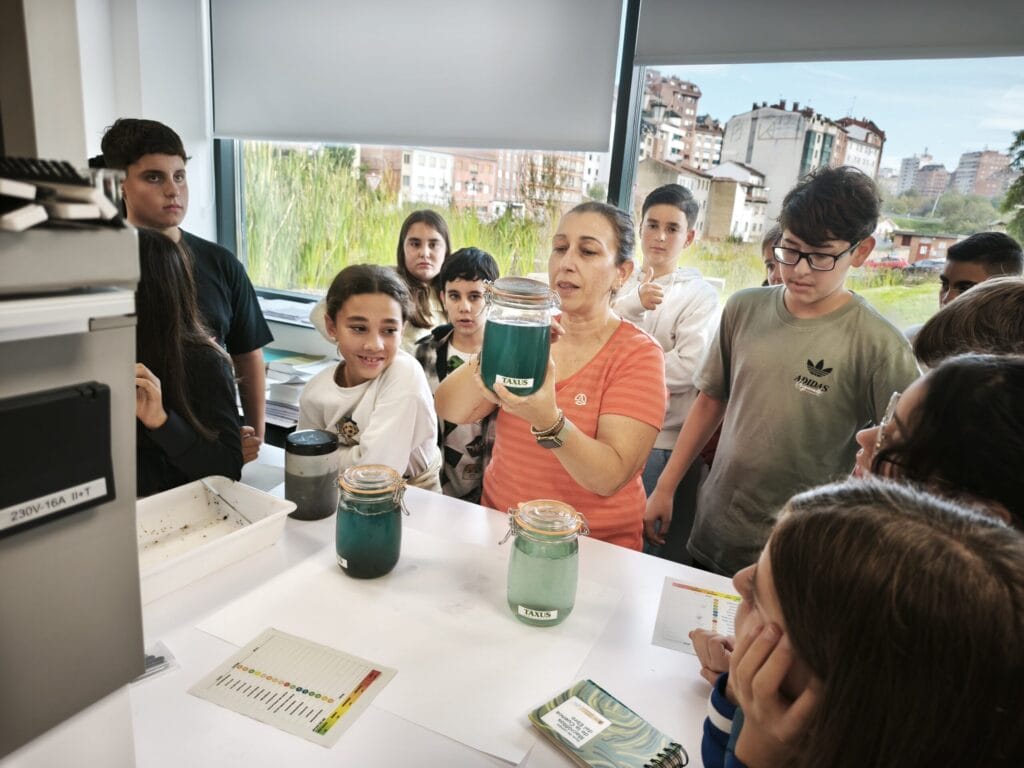
Blue Point addresses the issue of marine plastic waste through prevention, awareness, innovation, and the circular economy.
Within this framework, TAXUS MEDIO AMBIENTE coordinated and implemented a pilot environmental education program in Asturias aimed at the educational community, combining scientific knowledge, laboratory experiments, and field activities.
The goal was for students not only to receive information about plastic pollution but also to observe it, investigate it, and actively participate in activities related to its prevention and management.

From Scientific Knowledge to Action
The program was primarily aimed at students in grades 5 and 6 of elementary school and grades 1 and 2 of secondary school from educational institutions in various municipalities across Asturias.
At TAXUS, we designed the educational methodology, developed the content and teaching materials, coordinated the schools’ participation, and carried out the various activities, both at our facilities and in the natural environment.
The program was structured around three complementary areas: scientific experimentation, hands-on beach activities, and continued learning in the classroom.
Investigating aquatic ecosystems in the laboratory
The first part of the program took the students to the TAXUS facilities and laboratory in Oviedo to see firsthand some of the tools used in the study of aquatic ecosystems.
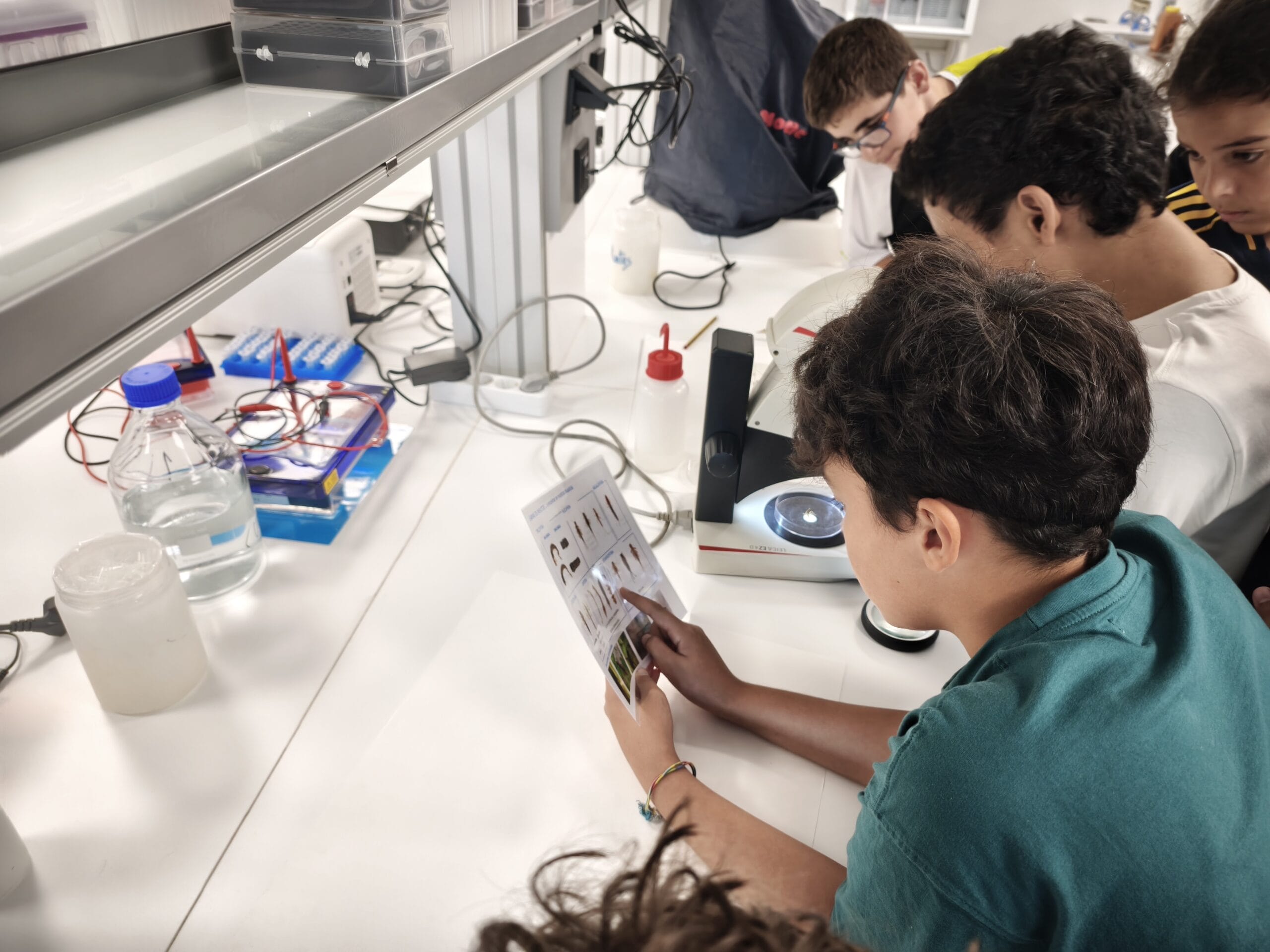
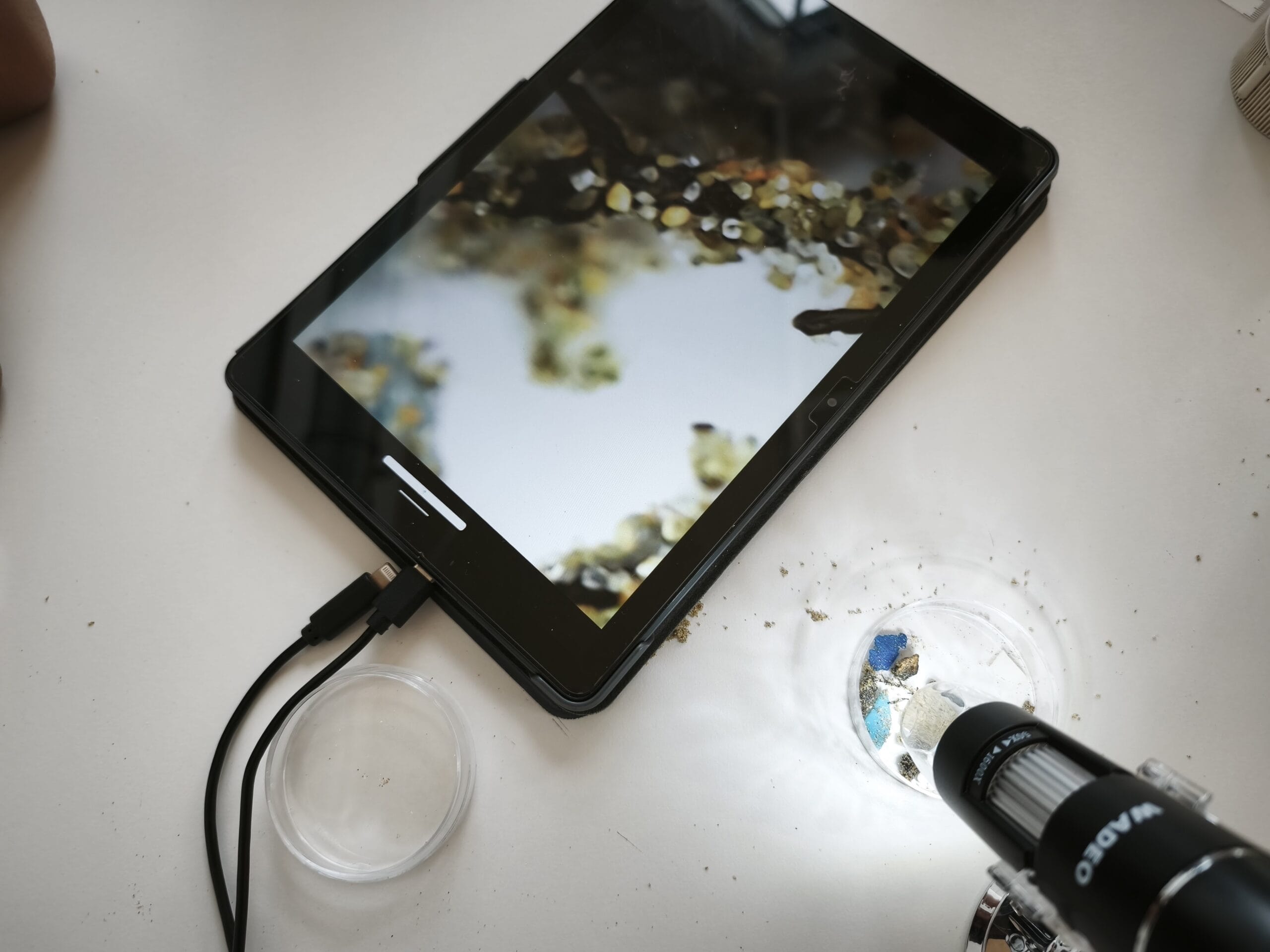
Using biological samples, magnifying glasses, and identification materials, the groups were able to observe aquatic macroinvertebrates and understand how certain organisms can provide information about the ecological quality of water.
The sessions introduced concepts related to biodiversity, the functioning of aquatic ecosystems, pollution, and processes such as eutrophication, bringing scientific work to life through a hands-on experience.
At the same time, the students investigated one of Blue Point’s central issues: the presence of plastics and microplastics in the aquatic environment.

Using samples of sand and seawater, sieves, filtration, and observation techniques, participants learned how to identify and classify small plastic fragments and to understand why some of this pollution may go unnoticed to the naked eye.
The activities also covered topics such as the different types of plastics, their effects on ecosystems, waste prevention, recycling, and the circular economy.
In total, 351 students and 20 teachers took part in the workshops held at the TAXUS facilities.

Five days of work at three beaches in Asturias
After tackling the problem in the lab, the program took what it had learned out into the field.
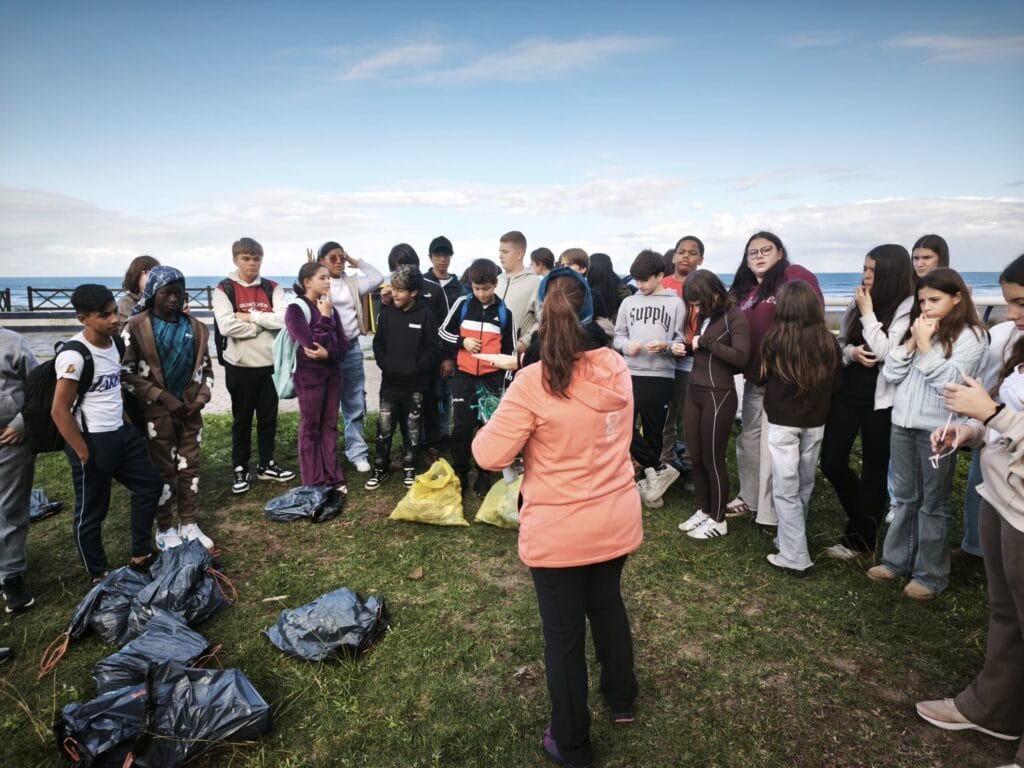
From October 19 to 23, five days of waste collection and characterization took place on the beaches of Los Quebrantos, Xagó, and Rodiles, with the participation of 412 students and 31 teachers.
The groups walked through different areas of the beaches, collecting the waste they found to later identify, sort, and analyze its possible sources.
The activities provided an opportunity to focus not only on waste removal but also on waste characterization, proper waste management, and the potential impacts on ecosystems.
There were also demonstrations of sand sifting to locate small plastic fragments that are difficult to detect with the naked eye.
Over the course of the five days, a total of 224.3 kilograms of waste.
A project that continues in the classroom
One of the program’s goals was to ensure that the experience didn’t end after the visit to the lab or the day at the beach.
To that end, at TAXUS we developed various educational resources designed to help schools continue working on plastic pollution, biodiversity, and the conservation of aquatic ecosystems.
Among them are two learning scenarios tailored for the third cycle of elementary school and the first cycle of secondary school under the theme “Microplastics: Small Fragments with a Big Impact on Ecosystems”, as well as an interactive guide on ocean ecosystems and another dedicated to the classification of plastics.
The materials combine scientific content, hands-on activities, and digital resources with the goal of ensuring continuity in the work carried out within schools.
| Indicator | Score |
|---|---|
| Cumulative holdings | 1,519 |
| Students participating in lab activities | 351 |
| Schoolchildren at the beach days | 412 |
| Collection and Characterization Days | 5 |
| Beaches where the show was performed | 3 |
| Waste collected | 224.3 kg |
| Buses in service | 21 |
Science, Engagement, and Environmental Education
Blue Point made it possible to combine several of TAXUS’s areas of expertise: education for sustainability, aquatic ecosystems, scientific laboratory work, waste, and environmental awareness.
Students were able to complete a comprehensive program: understanding how ecosystems work, investigating the problem of microplastics, testing for their presence in samples, and directly participating in waste collection and characterization sessions.
This experience brought technical and scientific knowledge into the educational setting through hands-on, participatory activities.
